

NZSA Disclaimer
Paul McBeth is the editor of The Bottom Line and Curious News, and previously worked at BusinessDesk for 15 years. He’s owned shares of NZX since January 2024.
The stock exchange operator’s tech pursuit is a step in the right direction.
If you were looking for the NZX’s ideal new listing candidate, it would be hard to go past Mint Innovation.
The e-waste recycler ticks two of those very sexy industry boxes in that it’s a smart technology company that also dabbles in extracting critical minerals from discarded items.
It probably doesn’t hurt that chief executive and co-founder Will Barker has a very Kiwi sensibility to his presentations, tempering the infectious youthful enthusiasm typical of startup events with plenty of self-deprecation.
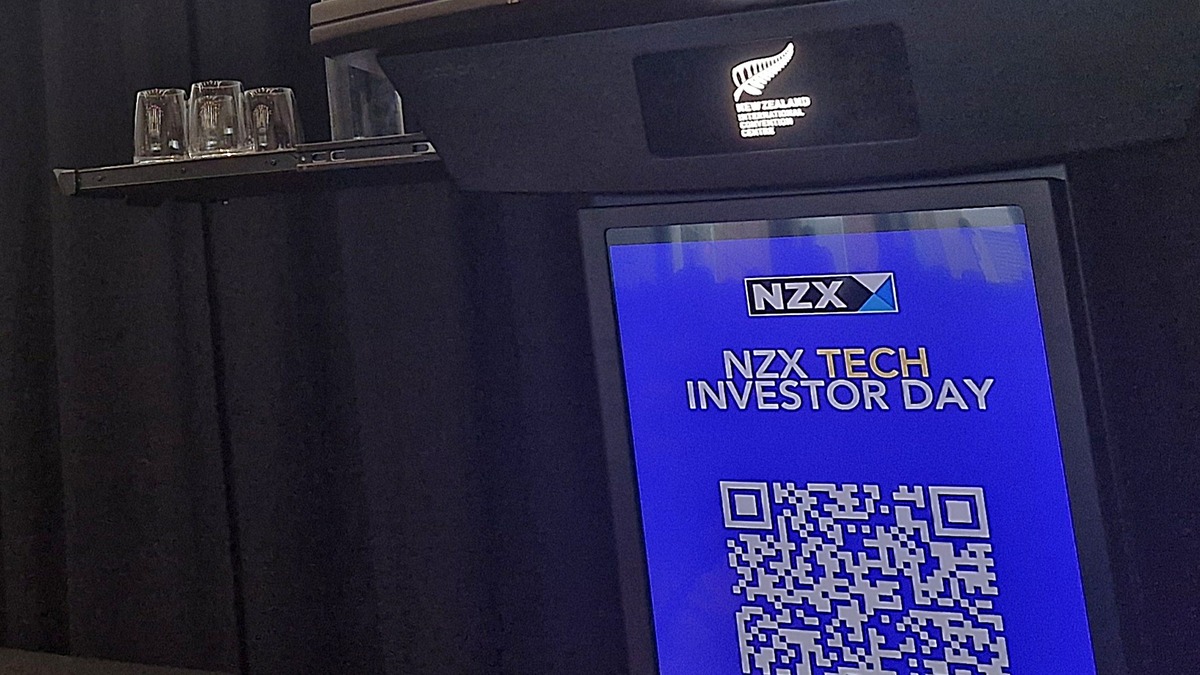
Barker came to mind because Mint Innovation was one of four private companies presenting at the NZX’s inaugural tech investor day earlier this month.
Mint Innovation had spurned the NZX when it was poised to list on the ASX last year before a simple twist of geopolitical fate threw a spanner in the works. So, it was a pleasant surprise to see Barker at the New Zealand stock exchange’s big shindig, especially given he told the NBR Podcast that he still has an eye on going public if the timing is right.
The stock exchange operator has been on a mission to prove wrong the naysayers that it just sits around waiting for potential listing candidates to come knocking on its door.
Don’t you know it’s gonna be alright?
The hustle last year to lure junior miners to New Zealand’s exchange through secondary listings led to a similar resources and exploration day earlier this year, which attracted 200 or so people.
Tech and resources aren’t quite the NZX’s traditional bread and butter, but they sure do offer a different risk profile to the 1.1 million Sharesies customers who are more inclined to pop their weekly investment in a Smart US 500 exchange-traded fund or the Nasdaq-listed Rocket Lab.
And we did hear from two potential candidates: mortgage broker and asset manager Squirrel and retail crime intelligence software firm Auror. Squirrel even told the crowd to pencil in a direct listing in the middle or late 2027.
Stock exchange staffers still have a spring in their step, despite the expected flurry of listings getting sidetracked by the whims of the White House – it’s hard to swim against a global tide when it seems like the US and Chinese stock markets are the only forums able to attract new blood at the moment.
The addition of BNP Paribas as a general clearing participant on the cash market, on top of its role as a designated market maker in driving the equity futures product, stoked optimism that New Zealand’s little corner of the investment world is starting to get on the screens of those giant investment houses – and, more importantly, into their portfolios.
You tell me it’s the institution
As UBS New Zealand investment banker Max Montgomery pointed out at the tech investor day, international investors don’t care where their gains come from as long as there are attractive opportunities.
Their concern is liquidity – if a giant investment house can’t get in and out of a position, that’s going to be a red flag for them.
“Investors always tell us they focus on quality first, liquidity second, and then they ask questions about liquidity,” Montgomery said, underlining the problems that the smartest minds in New Zealand’s capital markets still haven’t been able to crack.
Things like the NZX 20 futures should help boost turnover, albeit at the bigger end of the bourse that doesn’t need as much help.
Smaller companies on the stock exchange struggle for attention, with brokers unable to make the research economics stack up, meaning a paucity of analyst coverage perpetuates the downward spiral.
That’s something the Ministry of Business, Innovation and Employment is alive to, as it works its way through 80 submissions on how to improve the nation’s capital markets, with the NZX pointing to the lack of broker research as a significant hurdle for companies to consider going public.
Which isn’t to detract from the work being done.
We’d all love to see the plan
Lodestone Energy got its initial public offering away despite some sceptics, securing at least $75 million without an underwriter and taking the unusual step of including a general offer to people outside the traditional broking networks.
The company is in the very attractive renewable energy sector, with the swelling demand of artificial intelligence infrastructure – not to mention decarbonisation – a massive tailwind for what we used to call green energy a few years ago.
The solar farm developer’s market capitalisation of more than $400 million is the chunkiest new listing we’ve seen in a while, but let’s not overstate things – that would still leave it outside the top 50 index even if its free float was big enough to qualify for inclusion.
And when it comes to liquidity, even being part of the stock exchange’s benchmark doesn’t cut it, with the S&P/NZX 20 the real domain of big institutional flows – hence the futures product.
We all wanna change the world
Like Tāiko Critical Minerals, which listed at the start of the year, Lodestone is a company that’s at a relatively early stage in its growth, with plans to triple its footprint over the next six years.
The would-be miner is likewise in the preparatory stages, having got independent verification of the mineral weighting in the sands it plans to mine.
A consent is still in the works to extend the project on the West Coast and a processing facility needs to get built. But Tāiko is another growth-type company that the stock exchange has been wanting to attract.
Because as an isolated country at the bottom of the world, with an economy dominated by small and medium-sized enterprises, those are exactly the types of fast-growing ventures we should expect to see populating our stock exchange.
New Zealand simply doesn’t have the depth and liquidity of larger markets. Chapman Tripp’s advice to MBIE officials and whoever ends up in the commerce minister’s seat on the other side of the election is that we should be a natural home for growth companies.
Demand for the NZX’s tech investor day was such that it’s already lined up a sequel for March.
The next test will be whether those encouraging words from some private companies actually convert into new listings.
Image from Curious News.